Definition of electrolysis
Electrolysis is the breaking down of an electrolyte using an applied electric current.
An electrolyte is an ionic substance that has been dissolved in a solvent or has been melted.
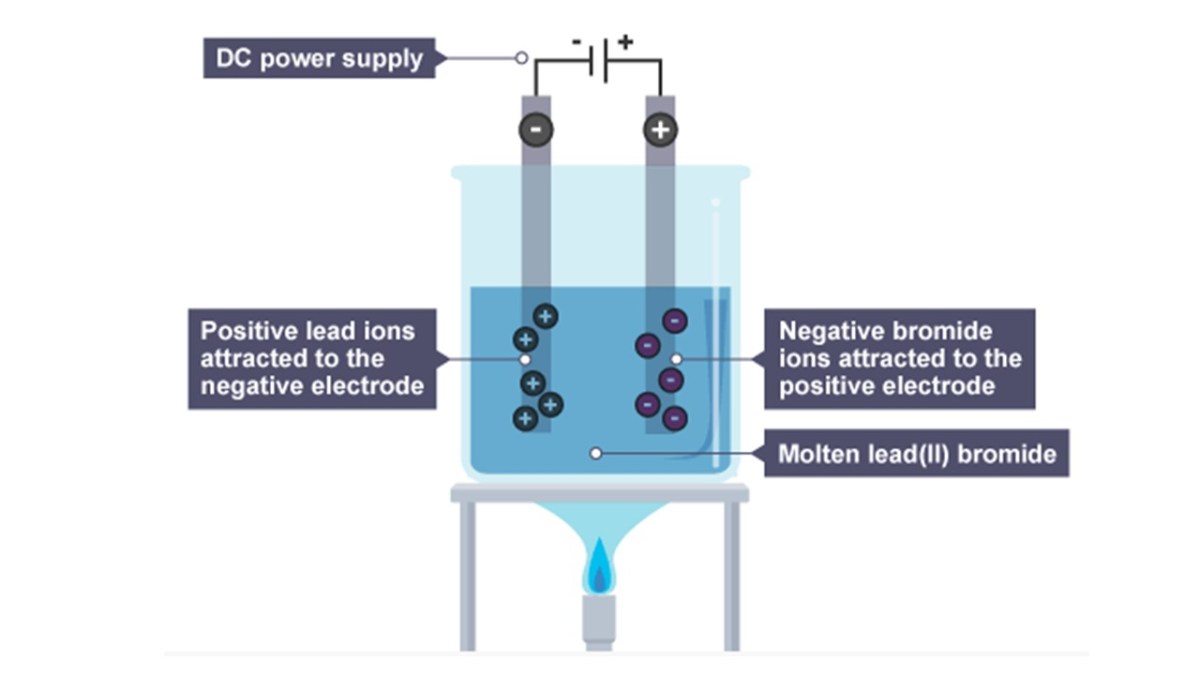
Electrolysis of molten compounds
The ionic compound is heated to a very high temperature until it reaches liquid state. The metal cations are positively charged metal ions. They will move towards the negatively charged electrode, called a cathode. These ions become metal atoms at the cathode.
The non-metal anions are negatively charged ions. They will move towards the positively charged electrode, called an anode. These ions become non-metal atoms at the anode.
Fig.1 – electrolysis of molten lead (II) bromide

Electrolysis of aqueous solutions
The ionic compound is dissolved in water. In water, there are H+ and OH– ions existing and they will compete with the metal cations and non-metal anions.
Fig.2 – electrolysis of aqueous copper sulfate

Half-equations explained
To figure out what is produced at the cathode (negative electrode) and at the anode (positive electrode), follow the two rules below:
Rule 1: At the cathode, check the reactivity of the metal ion. If it is more reactive than hydrogen, the hydrogen ions are reduced to form a hydrogen molecule.

Rule 2: At the anode, the anions are oxidised in the following order:
Halide ion > hydroxide ion > all other negatively charged ions

If there are no halide ions present to be oxidised at the anion, then the hydroxide ions are next to be oxidised and the following half-equation describes what happens to the hydroxide ion that is oxidised at the anode:
4OH– → 2H2O + O2 + 4e–
Practice questions


Source for Questions papers and Answers:
AQA GCSE Chemistry Topic 4: Chemical Changes Revision – PMT
Answers to practice questions:

Leave a Reply